MICA has a rural immersion program where second year students go to a village for about 2 weeks and help facilitate an organisation in solving a problem or volunteering. The following is my day to day experience.
Day 0
Day 1
Day 2
Day 3
Day 4
Day 5
Day 0 (17/09/17)
Took a flight from Delhi to reach MICA. Reached about 9 pm, had dinner and met a few people. We shall leave early tomorrow morning for Banaskantha district in Gujarat.
Our project entails talking to adolescents and figuring out ways to help eradicate child marriage. One of our sub projects is also to understand how information passes through social media in rural areas. I am both excited and nervous. I have never stayed in a village before in my life and I am unsure of what to expect. I do not know if I would be able to update this blog regularly as my primary motive would be to make requested deliverables. I consider myself very active on social media. But for this one time, I feel that I should devote myself to the cause and learn as much as possible because I know that it would be difficult to get this experience in such a setting again. Good luck to me !
*******************************************************************************
Day 1 (18/09/17)
We left in the morning at 10 am. Our earlier assumption was that Kankrej in Banaskantha was 3.5 hours away from MICA. It was more than that. We stopped around 1 pm for lunch at a hotel called “Hotel Shakti” on the highway. The food was delicious. We ordered Paneer Butter Masala and they had grated cheese on top of it something that I don’t understand. Beside the hotel was a small shop where I made my first rural purchase, a small comb worth Rs 5 as I had forgotten to carry it among all the other things.
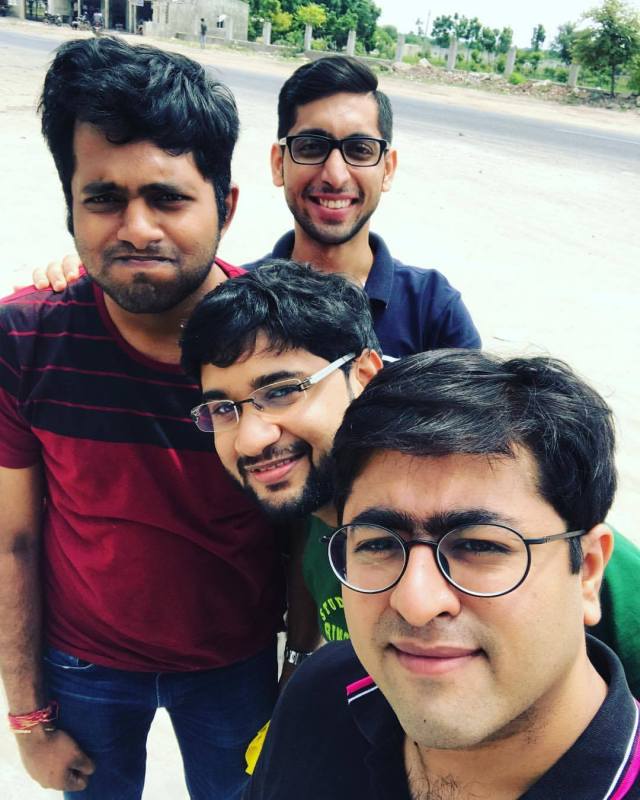
We reached Chamunda Devi temple around 3:10 pm.
The caretaker here showed us our rooms. There were 4 single beds and 2 attached washrooms.
Around 4:00 PM, one of the representatives from the Anarde Foundation came to meet us. He seemed very curious and driven. We talked about how long had he been associated with the cause of eradication of child marriage and what were his experiences.
He said that there were 2 main reasons for child marriage in this region :
1. Lack of education
2. Poor economic condition
One of their many agendas is to ensure that the girl children continue their education at school. We discussed about other efforts being made by the NGO.
After he left, all of us slept as we were really tired due to the travelling and the discussions with the NGO. In the evening we went to a nearby restaurant, “Hotel Darshan” for dinner and also bought mineral water for keeping in the room and carrying it with us.
2 facts:
1. When we asked where to go for dinner from a person on the street, he referred us to a hotel and said that we should go there as all “educated people” go there to eat.
Emphasis was on “education” and not on “income”.
2. We asked the Hotel management if rooms were available, they said that they would not be operating the hotel for 10 days on account of a major festival which was approaching.
We talked to our Points of Contact regarding tomorrow’s plan and we shall go for a field visit tomorrow. I feel both curious and anxious. Let’s see what happens tomorrow !
*******************************************************************************
Day 2 (19/09/17)
We got up at 8 am today because we were sweating as the fans had stopped. We realized that there was no electricity. We called up the caretaker and he told us that there will not be any electricity till 6 pm as some repair work was going on !
We had not accounted for this exigency, our electronic devices were not charged and we made it a point to buy spike busters so that we could charge multiple devices at night. We got ready and the caretaker got tea for the 4 of us. We left for breakfast.
We had breakfast from a small shop serving puffs, dabeli and bread pakodas. The food was oily but doable. We met two POCs from our partner NGO and proceeded towards a village called Savpur.
We went to the Anganwadi where we met the Sarpanch, children of the village and teachers.
The sarpanch was very young, 24 years old and seemed active. He had a new perspective and listed out reasons why child marriage was still practiced by certain people in the village. He also mentioned how he is helping to make the situation better in the village.
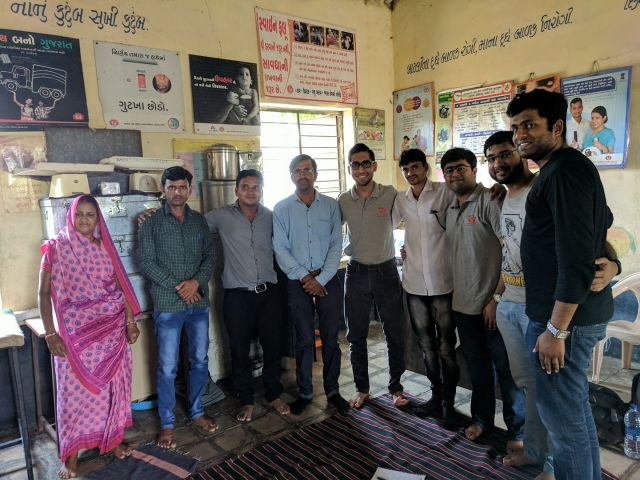
On further investigating and cross-checking the claims, we realized that the main reason for child marriage was “need” at that point of time and that “need” got converted to tradition.
वजह के कारण प्रथा बनी
The boys and the girls sat separately. The children were shy and it took some effort to make them speak. We asked them to introduce themselves and asked their name and hobbies. Almost everyone said that they liked to study.
Then we started introducing ourselves and I said, “My name is Somil and I do not like studying” and that made the kids laugh. I have realized that humour helps to ease tension in the room and people get more open and friendly once you make them laugh. This works across all geographies and settings – rural or urban.
We then talked to an adolescent girl who had been married as a child. She herself took a decision to not live with her husband till she was more mature. Such stories are moving as they make you realize how sometimes the act of taking decisions for your own life is a big thing in itself and makes you realize how privileged you are.
We returned back in the evening and compiled our notes to make a consolidated rural diary and made a central repository for all photos and videos.
Tomorrow we have a meeting with people from UNICEF and Anarde where we will decide further course of action.
*******************************************************************************
Day 3 (20/09/17)
Today was an insightful day. In the morning we went for breakfast at a nearby hotel. I had poha and tea. The tea was wonderful and had ginger in it. It was a very fulfilling meal. I felt happy after a long time. We returned back to our accommodation. A meeting was going on in the premises. We met our POC and he informed us to come a little later when all village volunteers would be there.
We went to our rooms and rested for a while. On returning back, we went inside a big hall which had around 50 village volunteers representing different villages.
We did not know Gujarati but we tried to understand what they had to say about their experiences. Our POC helped with necessary translations where required.
They told us about high prevalence of child marriage, why people do not talk about it, why people practice it and how their organization along with UNICEF has strategized to eradicate it.
This interaction went on for about 4 hours and none of us realized that we had missed our lunch as we were so engrossed in the new information and knowledge that we were receiving. We chalked out our itinerary for the coming days and went back to our rooms.
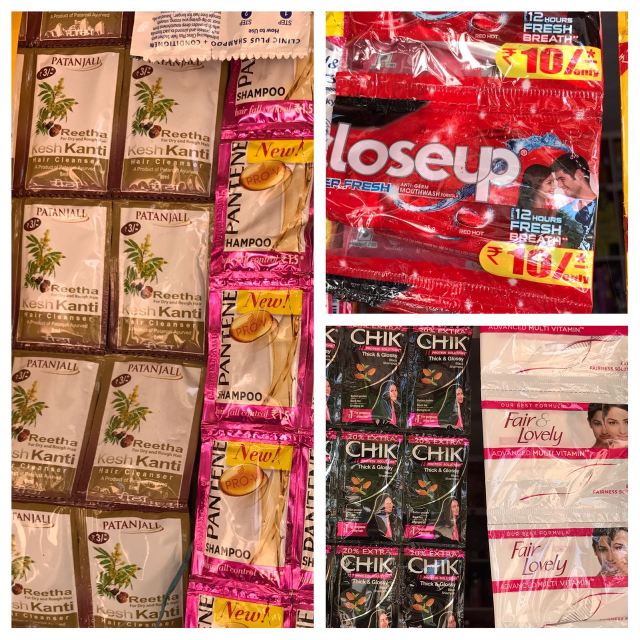
The evening was spent in exploring the local markets and cuisines. It was awful and not as interesting as I had imagined it to be. The products were mostly cheap imitations with slightly different brand names. The food was stale and horrible even though it was highly recommended by atleast half a dozen people who had guided us.
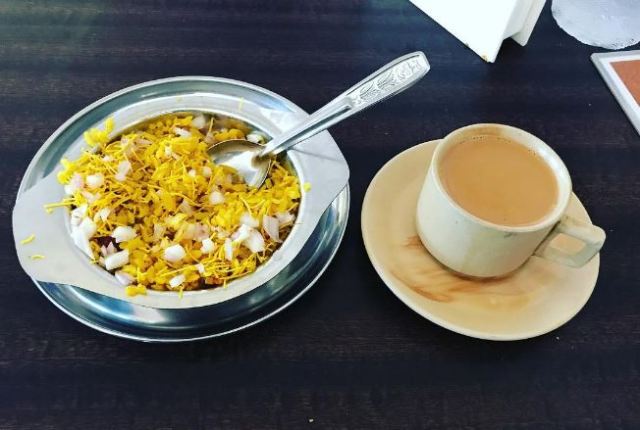
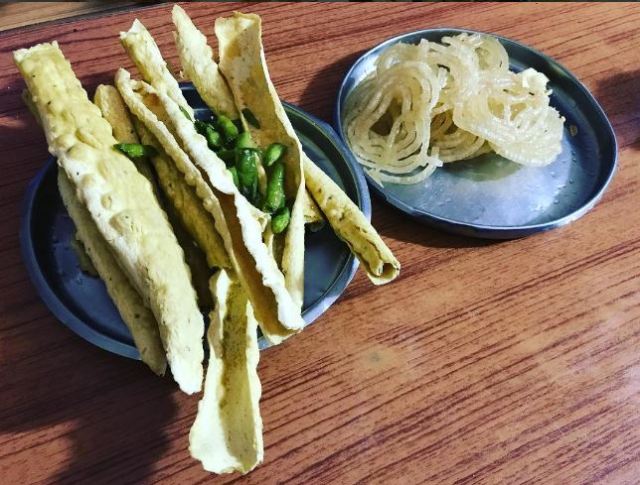
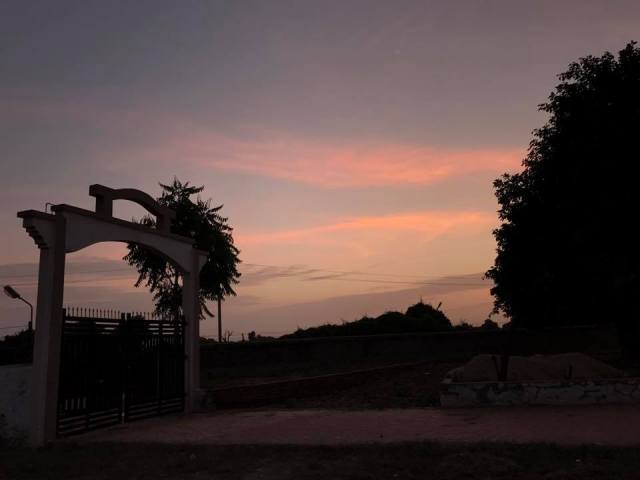
We went for a dinner at the hotel for the last time as it was scheduled to close due to a festival for 11-12 days. We ate to our heart’s content and discussed our strategy for the next few days.
We are scheduled to cover 4-5 villages in the next few days. We do not know how we are going to arrange for food.
Let’s hope everything turns out to be okay !
*******************************************************************************
Day 4 (21/09/17)
Today we had to cover a village called Anandpura. We needed to reach early as school starts at 10 am after which the students would have been unavailable. There was no time to have breakfast so we ate bananas that we had previously bought and had tea provided by the caretaker. It was around 8 kms from the place where we are staying. We reached there around 9:30 am and talked to the school kids about what they knew about child marriage. We had an FGD with the adolescent kids.
Later we interviewed 2 adolescent boys separately. They were full of life and were very aware. They told us about how they had helped stop child marriage of their friend in the village using unique and innovated ways. We were quite surprised by the ideas they mentioned to stop child marriage !
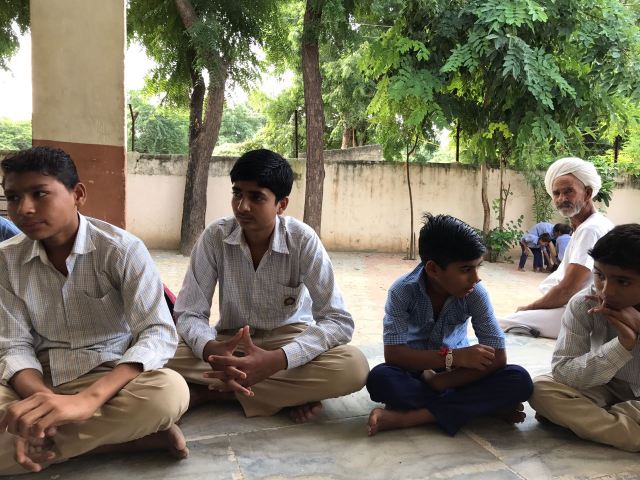
One of them said that they speak ill about the boy to the girl’s family and vice versa so that the marriage does not take place. It was a great experience !
We later went over to farms and asked about what all grows in the farm and what kind of cattle do they keep. The villagers were very hospitable and offered us sweets, water and tea.
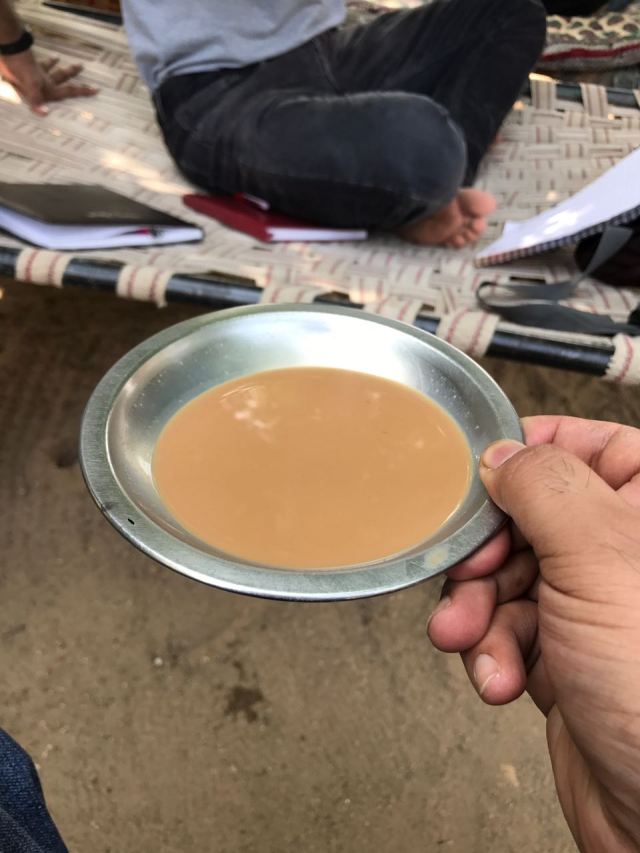
Patriarchy still exists but it is invisible. We went to a home in the village and a lady asked us to sit on the charpai. We all sat on the charpai and also asked her to sit. She refused. We were told later that ladies do not sit on the charpai if men are already sat on it. They even sleep at night by reversing the charpai. This was common in the village and nobody saw anything wrong with this practice.
I have a little idea about rural areas as I’m also an agriculturist.Everything seemed familiar apart from the fact that there was no poultry farm in this village.
We went back to the school area where we were given flavoured milk which was left after the children had already taken their share. This milk is manufactured by Amul specially for Govt. of Gujarat to be distributed to Schools and Anganwadis.
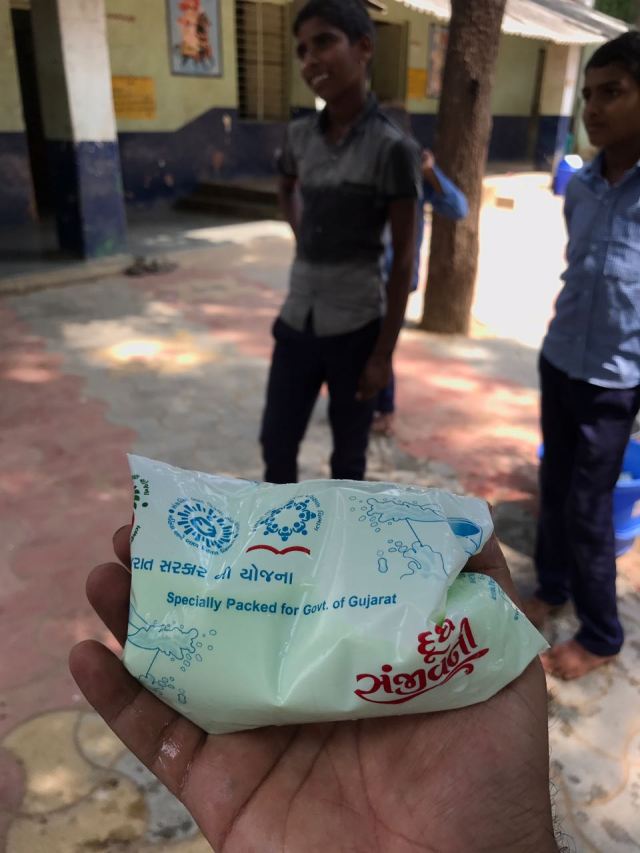
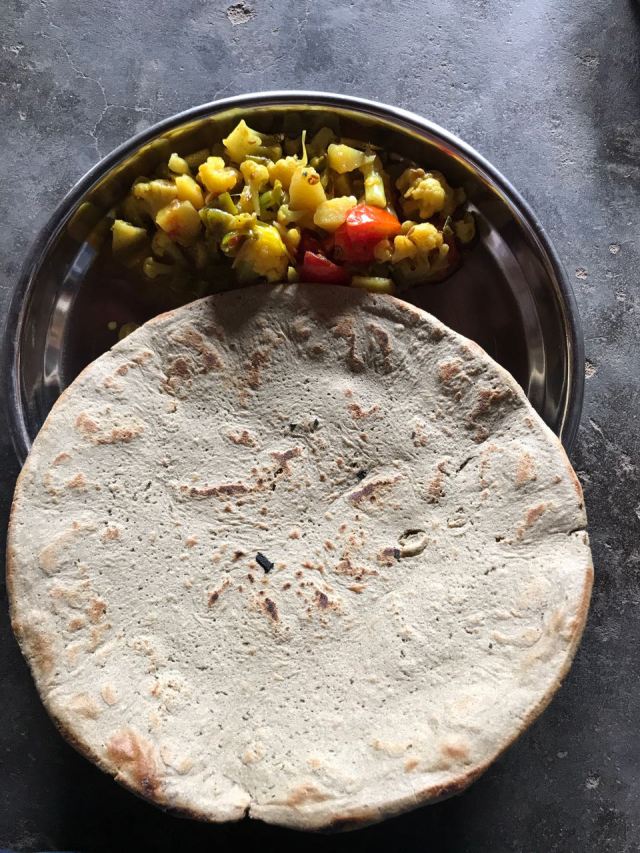
We later went to an Anganwadi where we met adolescent girls. We took an FGD and in-depth interview. We had assumed that the girls would be shy but they were very vocal and explained us a lot of things. Our mentor also came from Ahmedbad to help us with our research. After that we went over to a family’s house in the village where they served us great food which included Bajra Roti, Aloo Gobhi, Chaas and Gud. The meal was very fulfilling.
We bid farewell to our faculty mentor and came back to our rooms. The day’s activities and the heavy food made us sleepy and we decided to rest before compiling our research for the day. For dinner we went to a new place and it was horrible. The food was sub standard. The only saving grace was mineral water and chocolates that we bought from there.
I feel that urban vs rural is not equivalent to rich vs poor. It is a parallel India.
It is भारत. People in rural areas might have same purchasing capability but different viewpoints.
*******************************************************************************
Day 5 (22/09/17)
We got up late in the morning as we were supposed to reach the village by 11 am. Each day I get up, my hands and legs are covered with mosquito and insect bites. I plan to buy a mosquito repellent machine today.
We went to the nearby market for breakfast. I was really hungry and had a heavy breakfast comprising of vada pav, bread pakoda and a tomato-onion sandwich, along with tea.


We then went to Rajpur village. We met a group of adolescent boys who told us about the workshops by UNICEF that they had attended regarding child marriage. The boys had formed a group called “Shivaji” group. We then met a group of adolescent girls also associated with the cause, they hand named their group as “Jhansi ki Rani” group.
The adolescents raised awareness about child marriage and why it is harmful.
Children are really innocent. We asked the reasons why child marriage was bad and one of the main reasons they said was that the girls would miss their parents !
Their parents also joined the discussion. It was very surprising for us to note that in this village the boys had to pay dowry to get married because of the skewed gender ratio of 1000:850. The dowry was directly proportional to the age of the groom. Child marriage persisted in spite of awareness because parents wanted to pay less amount to get their sons engaged rather than pay a huge sum when he grows up.
We then had lunch at a home in the village. They served us Curry made from Chaas(Buttermilk) and Bajre ki Roti. The Bajre ki Roti was squished and they called it Churma. The Bajra Roti pieces and Curry were then mixed together. It was delicious.


We met a group of mothers who were associated with the anti-child marriage cause. We discussed about the issue with them and realized that they were well aware about the harms of child marriage.
While we were sitting on the cot and having a discussion with the mothers about child marriage, the NGO workers mentioned that it took 3 years for them to raise enough awareness to make girls sit on the chair/cot instead of the floor, and it will take a generation to raise enough awareness to completely eradicate child marriage.
A very important point that was raised by the mothers who had undergone the training by UNICEF. They said that they understand that child marriage is wrong, even their husbands are supportive, but it is really difficult to convince their in-laws and society. The NGO workers said that this change in thinking will take atleast a generation because the present generation of parents and children understand the issue, but a lot of harm would have been done by then and it was also imperative to educate the older generation.
At night, we had simple food at the nearby APMC (Agricultural Produce Market Committee). The price was reasonable and the food was hygienic. We observed that people from well to do families were also there which made it look reliable to us.
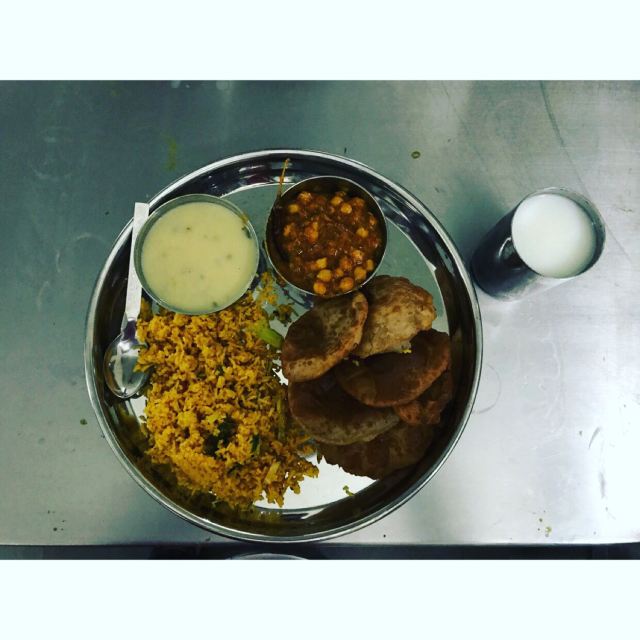
We came back to our rooms to update our rural diaries and retire for the day.
*******************************************************************************
Day 6 (23/09/17)
Today was a mixed day for us. We had contacted our NGO Point of contact the previous day and she had said that we should arrive at the Changa village by 1 pm. We knew that it was very late but we decided to go along with what she said. Our morning was spent in typing our consolidated rural diary till that point of time as a part of our submission.
For breakfast we had tea that the caretaker of our accommodation made for us along with fruits. The mornings in rural areas are really scenic.
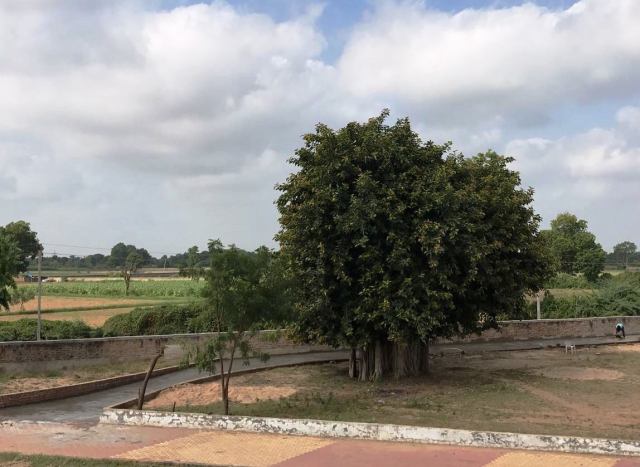
We arrived at the Changa village and were welcomed by an influential family in the village. We sat in an open hall which had tiled flooring. Adolescent girls were seated in a semi circle with a place designated for us 4 people to come and sit. They brought a standing fan and placed it in such a way so that it faced us. I observed the room. There was a Panasonic LCD television and sacks kept in a corner consisting of some kind of grains. We asked the POC to introduce us to the adolescent girls. We then told our names and explained our purpose of visit.
Their group was called “Satyam Shivam Sundaram”. The adolescent boys had also formed a similar group which was called “Chanakya”. They told us that child marriages had substantially reduced in the village after UNICEF’s intervention. They also mentioned that one of the main reasons was that the people in this particular village were more educated as compared to the nearby villages. The village had a school till class 12th after which the students who had to travel to the nearby village of Thara to pursue graduation.The gender ratio in the village was almost equal. The situation is reverse here as compared to other villages, sometimes the boys do not feel like studying and hence do not go to the school but girls still continue their education!
The adolescent girls said that some of them had mobile phones which their parents had gifted them and they had access to WhatsApp, Facebook, YouTube and internet in general.
We talked about the concept of child marriage in detail with them. The girls told us that even though child marriage is not prevalent but kids get engaged and are then married when they turn 18. The married girls told us that after getting married they realized that they had been engaged as kids but they had no understanding of the ritual at that point of time. The main reason they stated was that parents think that they might not find a suitable spouse for their kids in future so it is alright to get them engaged at an early age.
We concluded our discussion with them and talked about Garba to lighten the intense conversation. My friend Srinath who is in Cultural Committee at MICA even taught a few steps to the adolescent girls !
We then took a tour of the village. There were two temples,a few provision stores, two schools – primary and secondary , and an Anganwadi. We also saw what kind of products were being sold at the kiosks in the village.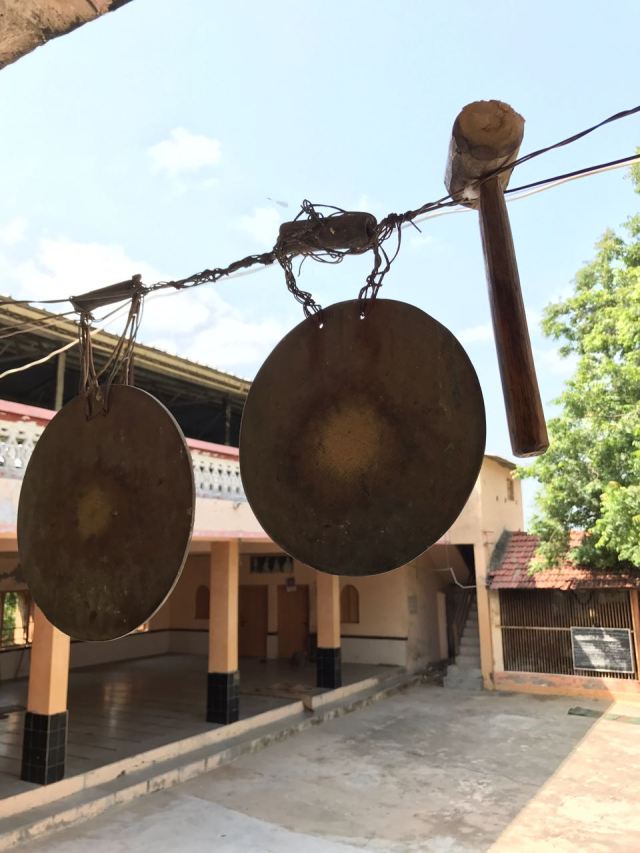
After a tour of the village we met the members of the CPC and talked with them regarding various child related issues.
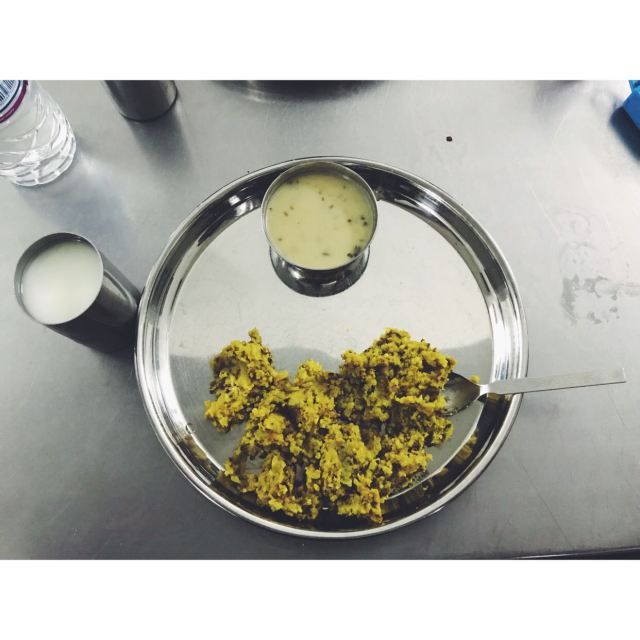
At night we went for a meal at the APMC. I had khichdi and curry along with chhaas(buttermilk).
We later returned to our rooms and talked with one of our POCs of the Anarde foundation. He asked our experiences and we told him that this village was better than others. He explained that the community living in that particular village is more educated and hence they have very less child marriages. We wrote our insights of the day in our rural diaries.
*******************************************************************************
Day 7 (24/09/17)
Our breakfast consisted of tea and bananas. We left for a village called .
<insert village image here>
We arrived at the primary school. The school was closed as today was a Sunday. Some men of the village had gone to arrange cots for us to sit on. So I explored the school till then.The school seemed well designed. The feature that struck me most was that the school was very disabled-friendly with ramps to help children who use wheelchairs.
We then met Gayatri
Gayatri of village
In the evening we had a meeting with all the volunteers who had guided us in their villages.
 Aiming to live a considered life.
Very good Somil 🙂